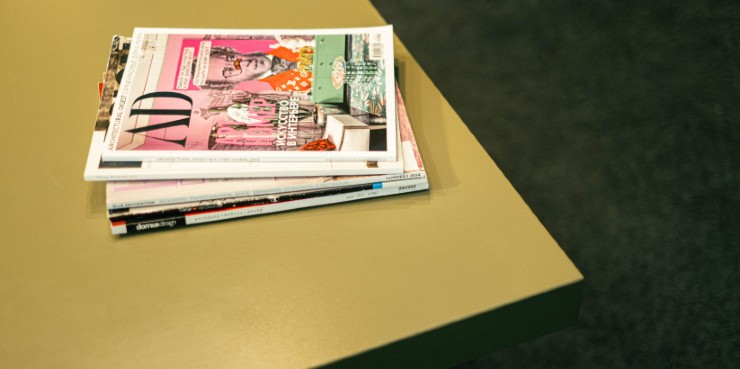
In an era where screens dominate nearly every waking hour, it’s tempting to assume that print media has quietly shuffled off into the archive room, somewhere between the fax machine and the Rolodex. That assumption would be wrong.
Print media hasn’t disappeared. It’s simply evolved, narrowed its focus, and in many ways become more powerful precisely because it is no longer everywhere.
Print Media Offers Better Engagement
Digital platforms are unbeatable for speed, reach and immediacy. News breaks online. Promotions launch online. Opinions ignite and burn out online, often before lunch. But impact is a different metric, and this is where print still earns its seat at the table.
Print commands attention in a way digital rarely does. A printed publication asks the reader to slow down, to engage deliberately rather than reflexively scrolling. There are no pop-ups, notifications or competing tabs. When someone opens a magazine or trade journal, they’ve already made a choice: this is worth my time. That choice creates a level of focus that digital channels struggle to replicate.
Indisposable Content
For specialty retailers, print also conveys credibility. A well-produced magazine or journal feels curated and intentional. It suggests expertise, editorial judgment, and permanence. Digital content can feel disposable, even when it’s excellent. Print content feels vetted. When a retailer, vendor, or consultant appears in print, the implied message is not just “we exist,” but we matter.
Another overlooked strength of print is retention. Readers remember print content differently. Studies consistently show that people absorb and recall information more effectively when reading on paper versus screens. For trade publications, this matters. Articles about strategy, operations, staffing, merchandising or long-term planning benefit from reflection, not skimming. Print encourages deeper cognitive engagement.
Print also excels at context. Digital favors fragments: headlines, excerpts, sound bites. Print favors narratives. It allows ideas to be developed, arguments to be explored, and nuance to survive intact. For specialty retail, which lives in the gray areas between data and instinct, this depth is invaluable.
Integrating Digital and Print Media
None of this means print should compete with digital. That battle was settled years ago. The winning strategy is integration. Digital drives awareness and immediacy. Print delivers authority and longevity. Digital invites the click. Print earns the trust. The smartest publishers and retailers understand that these channels work best together, each doing what it does best.
Print media no longer needs to be first. It needs to be meaningful. In a digital-first world overloaded with content, print stands out by refusing to rush, by demanding attention, and by offering something increasingly rare: the chance to think.
That’s not nostalgia. That’s strategy.
Alan Miklofsky has been a business owner for over 40 years, including operating and selling a successful retail shoe chain. Today, he works as a business consultant helping independent retailers strengthen operations, refine marketing strategies, and thrive in an increasingly competitive retail environment.