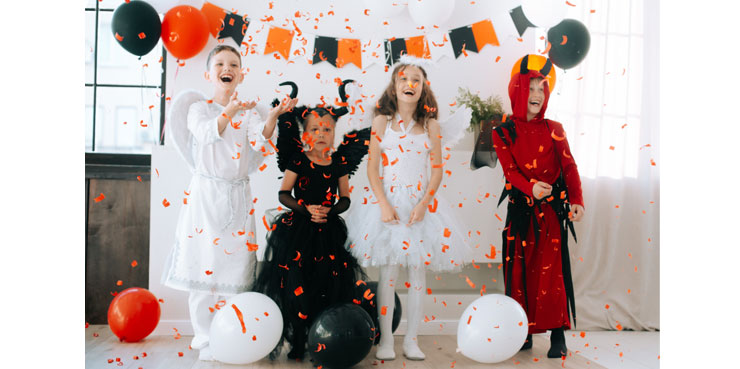
Americans are expected to spend a record $13.5 billion on Halloween in 2026, according to a new National Retail Federation (NRF) forecast. But alongside the spending boom, shoppers are looking for ways to make their celebrations feel personal and get more use from what they buy.
In the NRF survey, 34% of consumers said they plan to look for Halloween items they can reuse or repurpose. Nearly half, 49%, expect to begin shopping in September or earlier. The federation also forecasts $4.3 billion in spending on decorations this year.
Separate research conducted by Resparked found searches for “Halloween crafts” rose 131% in the month of September, reaching an estimated 11,000 US searches. Searches for “Halloween decor” rose 68% over the same period, reaching approximately 27,000.
The figures do not show that people are replacing store-bought decorations with homemade ones. They do show that interest in making Halloween items was rising sharply as the shopping season began.
“Halloween has always been creative, but I think we’re seeing a real shift from simply decorating your home to actually making something for it,” Santiago Roa, founder and CEO of Resparked, said. “People don’t necessarily want their house to look exactly like everyone else’s. They want to put their personality into it, whether that’s customizing a pumpkin, creating their own signs, personalizing glassware or turning something they already own into Halloween décor. That’s what makes Halloween such a good entry point into crafting. There are almost no rules. It can be weird, imperfect, spooky or completely over the top.”
The Search for Halloween Ideas is Growing
Resparked’s analysis found approximately 38,000 combined searches for “Halloween crafts” and “Halloween decor” during the month it examined. Décor attracted the larger search audience, at an estimated 27,000 searches, but crafts grew faster: 131% month on month, compared with 68% for décor.
“Buying Halloween decorations is nothing new. What’s interesting is the speed at which people are starting to search specifically for things they can make,” Santiago said. “There’s a different mindset behind searching for a Halloween decoration and searching for a Halloween craft. One is about finding a finished product, while the other is about finding an idea and creating something yourself. For brands like ours that are seeing people increasingly interested in customizing everyday objects, that’s a really interesting shift.”
Why Making Something Yourself Appeals to Shoppers
NRF’s findings suggest value is part of the planning process: 31% of shoppers say they would compare prices if Halloween items cost more than expected, while 26% would look for coupons or sales. Its finding on reuse also points to interest in decorations that can come out again next year.
For Resparked, the appeal of crafting goes beyond cost. People can customise items they already own, personalise inexpensive blanks or create decorations that become part of an annual tradition.
“Personalization changes the relationship you have with an object,” Santiago said. “A glass is just a glass until you’ve engraved something personal onto it. The same goes for a wooden sign, a pumpkin decoration, a serving board or something you’ve made for a Halloween party. You’re not necessarily creating something because it’s cheaper or because you couldn’t buy an alternative. You’re doing it because the finished piece is yours.”
Resparked describes short, accessible creative activities as “Snack-Hobbies,” which are projects people can pick up without committing to extensive equipment or a regular schedule.
“Not everyone wants a hobby that takes over an entire room in their house,” Santiago said. “A lot of people just want something creative they can do for an hour after work, on a weekend or with friends. That’s why we talk about Snack-Hobbies. You can pick something up, make or personalize an object and actually have something physical to show for your time. Halloween gives people an obvious excuse to try it.”
He also believes the appeal lies in spending time making something tangible.
“Most of us spend a huge part of our day looking at screens, and then somehow end up doing exactly the same thing when we’re supposed to be relaxing,” Santiago added. “There’s something satisfying about doing something with your hands instead. You have to concentrate on what’s in front of you, and when you’re finished you’ve actually created something. You don’t need to give up your phone or suddenly become an expert craftsperson. Sometimes it’s just nice to spend an hour doing something that exists outside a screen.”
Halloween projects can also become an activity for families, couples, friends and party guests.
“Halloween is probably one of the least intimidating times to try something creative because perfection really isn’t the goal,” Santiago said. “You can get friends together, customize decorations, make things for a party or personalize gifts and nobody is expecting professional results. In fact, something being slightly strange or imperfect usually makes it better.”
Halloween is the Start of a Longer Creative Season
Resparked’s review of five years of search behavior found that interest in Halloween crafts and décor typically builds ahead of October and peaks around Halloween. Its September figures suggest that the 2026 rise was already underway before the NRF released its spending forecast.
“Halloween is really the beginning of the biggest creative period of the year,” Santiago said. “Once people start making things for Halloween, you move almost immediately into fall decorating, Thanksgiving and then Christmas. Those occasions all have something in common: people want their homes, decorations and gifts to feel personal. I think we’re going to see more people asking ‘how can I make this mine?’ rather than simply ‘where can I buy this?’”