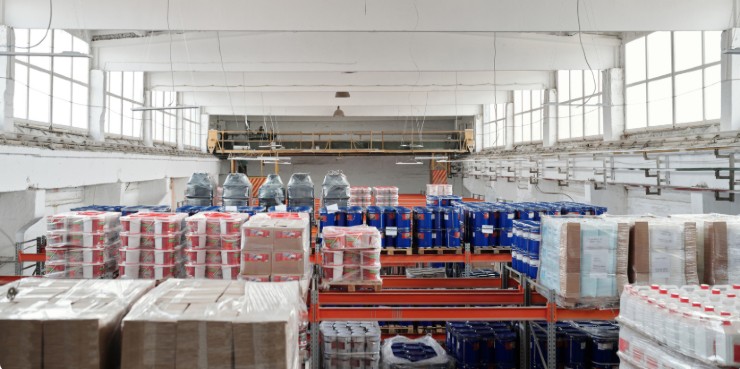
Many of the most expensive supply-chain problems don’t appear as discrete line items on a P&L. They build quietly through missed delivery windows, manual workarounds and blind spots between handoffs that only become visible after costs have already compounded. At the root of the issue, the middle mile is still operated as a series of disconnected steps rather than a coordinated system. Deliveries are scheduled based on assumptions, freight is planned and executed through manual intervention, and visibility often arrives too late to change the outcome.
In 2026, the retailers that outperform won’t simply negotiate better rates or add capacity. They will eliminate these hidden operational costs by rethinking how freight moves through the middle mile and by turning cross-docks into technology-enabled control points. When executed well, this approach keeps store replenishment, vendor consolidation, zone skipping, last-mile injection and big-and-bulky delivery running on time, with fewer touches and true parcel-level accountability.
Hidden Cost #1: Labor Inefficiency Driven by Unreliable Delivery Timing
The hidden cost:
Store labor planning has become one of retail’s most fragile balancing acts. When replenishment deliveries arrive early, late or outside expected windows, stores absorb the shock: associates pulled off the floor, overtime to unload and stage, backrooms congested and shelves left empty at peak traffic hours. These costs rarely get attributed to transportation, but they originate there.
Labor constraints make the problem worse. The U.S. Bureau of Labor Statistics (BLS), continuously reports that keeping good retail workers is notoriously difficult. The annual turnover rate in the retail trade sector hovers around 60%, with some subsectors, such as general merchandise and clothing, reaching 81%. Managing deliveries shouldn’t add friction to an already strained workforce or force store employees to spend disproportionate time on tasks that should be predictable and streamlined.
Why it persists
Most delivery schedules are built upstream and treated as fixed promises, even though conditions downstream change constantly. Linehaul, cross-dock operations and store delivery are often planned in isolation, with limited ability to rebalance when volumes shift or delays occur.
The answer: Orchestrated delivery windows, not static schedules
Retailers that are reducing labor volatility are treating store delivery as a network outcome, not a calendar entry. Add live tracking and mobile notifications to every shipment. When teams know what’s arriving and when, they can prioritize tasks and avoid delays.
In practice, this means synchronizing inbound freight with downstream store needs, sequencing deliveries based on labor availability, and routing freight through the most reliable paths rather than the fastest theoretical ones. Pre-sort shipments by store, SKU and velocity before they hit the store dock. When the middle mile is orchestrated this way, stores receive freight within defined windows they can staff against, reducing overtime and operational disruption. Reliability becomes the driver of labor efficiency, not speed alone and store teams stop absorbing the cost of upstream variability.

Hidden Cost #2: Manual Processes That Quietly Drain Margin
The hidden cost
Manual work remains deeply embedded in retail logistics. Spreadsheets reconcile freight. Whiteboards manage exceptions. Teams rescan, relabel, resort and reroute product when systems fall short. Each task seems manageable. Collectively, they introduce delay, increase error rates and consume labor that should never have been required in the first place.
The scale of the issue is well documented. McKinsey analysis suggests that digitizing manual supply chain planning and processes can reduce operational costs by up to ~30%, highlighting the cost burden of staying manual.
Why it persists
Manual processes often exist because freight, parcel, replenishment and bulky deliveries are managed as separate workflows.
The answer:
Retailers that are shrinking manual work are not simply adding automation in isolated facilities. They are redesigning decision-making across the middle mile, so execution happens consistently, without human intervention at every handoff. When freight, parcel, replenishment and bulky flows are managed in separate systems, people inevitably become the glue holding the network together. That glue is expensive.
The more effective approach is to run the middle mile through a single execution layer and dashboard that unifies how freight is planned, routed and handed off across modes. In practice, this means fewer spreadsheets, fewer emails and fewer “hero moments” on the dock floor. Exceptions are handled upstream instead of being discovered at the last minute by operations teams. Labor is no longer consumed by reconciling mismatched plans; it is now focused on execution.
By collapsing fragmented decision-making into a unified middle-mile platform, retailers eliminate entire layers of manual work that quietly drain margin.
Hidden Cost #3: Visibility Gaps That Force Expensive Reaction
The hidden cost
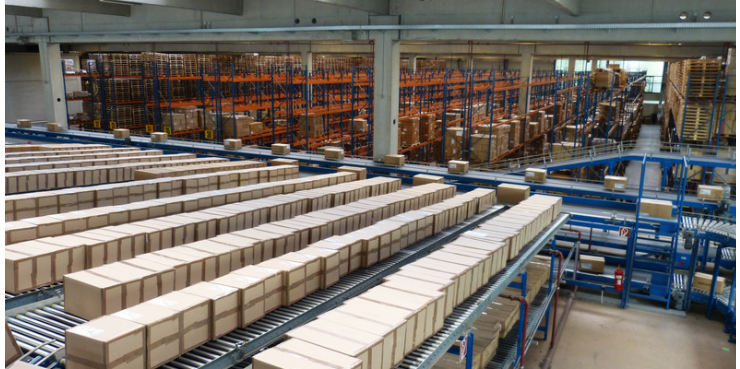
Most retailers can see when freight departs and when it arrives. What they struggle to see is what’s happening in between, particularly at a parcel or SKU level. That blind spot delays intervention and forces teams into reactive mode: expediting freight, issuing refunds, escalating customer service cases and scrambling to recover service.
Visibility gaps remain widespread. In fact, broader industry benchmarking shows that only about 6% of companies have achieved full end-to-end supply chain visibility, meaning the vast majority are operating with partial or siloed views that obscure risk and cost in the middle mile.
Why it persists
Traditional visibility tools are built for reporting, not decision-making. Parcel, freight and store delivery data often reside in separate systems, and alerts arrive after delivery windows have already been missed.
The answer: Visibility that enables intervention, not just awareness
Knowing where freight is only matters if that knowledge arrives early enough to change the outcome. In too many networks, visibility exists but is fragmented across parcel, freight and store delivery systems and is disconnected from execution.
Modern middle-mile networks close that gap by linking shipment-level and parcel-level visibility directly to routing and allocation decisions. When the network can see where freight is slowing, missing a cutoff or risking a delivery window, it can reroute volume, shift injections or rebalance capacity in real time. Problems are addressed while freight is still in motion, not after it has already failed. Visibility becomes a trigger for intervention, not a postmortem.
What Retailers Can Do Now
For many retailers, the most impactful move in 2026 won’t be retrofitting their own facilities. It will be reassessing their middle-mile provider relationships. The right partners aren’t just moving freight; they’re orchestrating it.
Key questions to ask:
- Can this provider commit to store delivery windows and consistently execute against them?
- Can they reduce manual touches through automation and standardized workflows?
- Can they provide parcel-level visibility from the cross-dock to last-mile injection?
- Can they dynamically reroute and recover when conditions change — without pushing disruption downstream to stores?
In 2026, the retailers that gain an edge will be those that eliminate the hidden costs created by unreliable delivery timing, manual work and limited visibility in the middle mile. By aligning partners around shared execution standards and using technology to orchestrate decisions, retailers can reduce labor strain, simplify operations and move freight with far fewer surprises.
Daniel Sokolovsky is a Los Angeles-based entrepreneur and co-founder and CEO of Warp, an enterprise freight transportation service powered by advanced technology. As CEO, Sokolovsky is responsible for managing the company’s overall operations including managing the company’s organizational structure, guiding the Warp brand and overall company strategy.